
Vulnerability management often defaults to a simple rule: higher CVSS score means higher risk. This leads to a reactive cycle, patching every critical or high-severity CVE without confirming active exploitation. Such an approach consumes significant resources, yet it doesn’t always address immediate threats. A high CVSS score indicates theoretical severity. It does not confirm active exploitation.
The Limits of CVSS-First Prioritization
The Common Vulnerability Scoring System (CVSS) offers a standardized way to rate vulnerability severity. It considers factors like attack complexity, privileges required, and impact on confidentiality, integrity, and availability. These are valuable metrics for understanding potential damage.
However, CVSS scores are static. They describe what could happen, not what is happening. A vulnerability with a high CVSS score might remain unexploited for years. Another, with a moderate CVSS rating, could be under active attack right now. Relying solely on CVSS can lead to “patch fatigue,” where teams address theoretically severe but practically inert vulnerabilities. This diverts attention from the vulnerabilities adversaries actively use. It misallocates defensive effort.
What KEV Signifies: Active Exploitation
The CISA Known Exploited Vulnerabilities (KEV) Catalog shifts focus from theoretical severity to confirmed risk. A vulnerability in the KEV catalog means CISA has reliable evidence of active exploitation in the wild [0]. This is a critical distinction: it moves a vulnerability from a potential threat to an active one.
A KEV listing is an immediate call to action. It bypasses the “what if” scenario of CVSS and replaces it with a “what is” reality. For defenders, this means the vulnerability is no longer theoretical; it is part of an adversary’s toolkit right now.
Integrating KEV into Your Vulnerability Prioritization Workflow
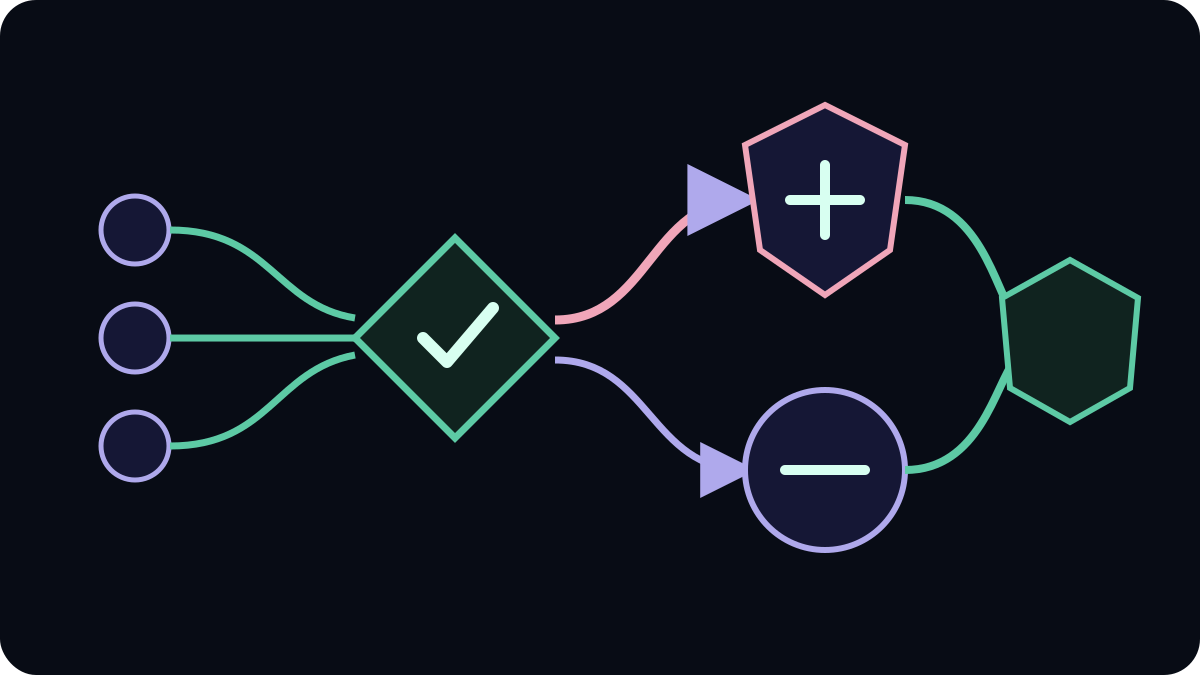
Effective vulnerability management requires a triage system that prioritizes based on actual threat, not just potential impact. Integrating the KEV catalog into your workflow means adding an explicit check: “Is this vulnerability in KEV?” If yes, that vulnerability moves to the top of the remediation list, regardless of its CVSS score.
This does not mean ignoring CVSS entirely. CVSS still informs the impact of a successful exploit. But KEV informs the likelihood of that exploit occurring soon. The combination provides a more accurate risk profile: high-CVSS KEVs are critical. Medium-CVSS KEVs are also critical. High-CVSS non-KEVs are important but less urgent.
Practical Steps for KEV-Driven Response
Shifting to KEV-first prioritization requires a structured process:
- Inventory Management: Maintain an accurate, up-to-date inventory of all assets, software, and dependencies. You cannot protect what you do not know you have. This inventory must be detailed enough to identify affected systems when a KEV alert is issued.
- Continuous Monitoring: Regularly check the CISA KEV catalog. Automate this where possible, integrating KEV updates into vulnerability scanning and reporting tools.
- Vendor Advisories: Cross-reference KEV entries with vendor advisories. These often provide specific mitigation steps, patches, or workarounds.
- Prioritized Mitigation: When a KEV-listed vulnerability is identified in your environment, prioritize its remediation. This might involve applying patches, implementing temporary mitigations, or isolating affected systems. The goal is to shrink the attack surface quickly.
- Ownership and Accountability: Assign clear ownership for KEV remediation tasks. Ensure teams responsible for specific systems understand their role in addressing KEV items and have the necessary resources.
- Verification: After mitigation, verify the vulnerability has been successfully addressed. This could involve re-scanning or manual checks.
Consider a team, previously overwhelmed by a backlog of high-CVSS items, that adopted a KEV-first approach. By focusing on actively exploited threats, they significantly reduced the time it took to remediate KEV-listed vulnerabilities. This reallocation of effort meant they addressed real-world attacks faster, without increasing headcount. The blast radius of potential incidents was reduced because they patched what mattered most, first.
Beyond the Patch: Sustaining a KEV-Aware Program
A KEV-aware program is not a one-time fix; it’s continuous. It requires ongoing vigilance, clear communication, and a culture that understands the difference between theoretical risk and active threat. By prioritizing KEV entries, organizations can shift from a reactive, broad-spectrum patching approach to a proactive, threat-informed defense. This means fewer resources wasted on unexploited vulnerabilities and more effective protection against attacks already underway. The goal is to keep incidents small. Addressing known-exploited threats first is the fastest way to do that.